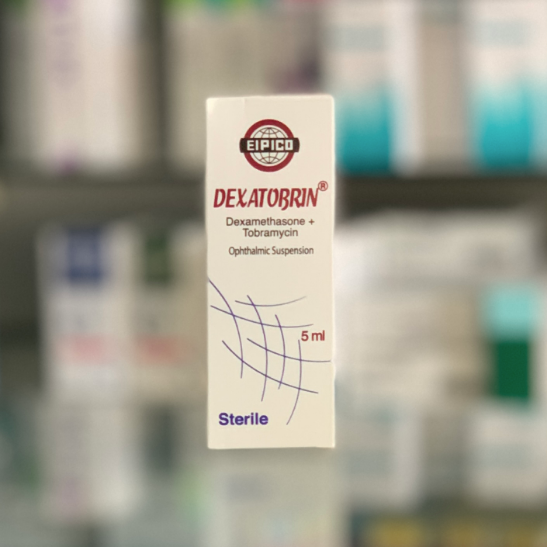
Dexatobrin ophthalmic suspension 5 ml
SKU: EGA-003741
Tradename
Dexatobrine
Dexatobrin
Compound:
Each 1 ml of the drug contains:
Tobramycin 0.3%
Dexamethasone 0.1%
Auxiliary components:
benzalkonium chloride, disodium edetate, sodium chloride, anhydrous sodium sulfate, tyloxapol, hydroxyethylcellulose, sodium hydroxide or sulfuric acid (to maintain pH), purified water.
Properties
Combined drug with antibacterial and anti-inflammatory action for topical use in ophthalmology.
Tobramycin is a broad-spectrum antibiotic from the aminoglycoside group. Active against gram-positive and gram-negative microorganisms: Staphylococcus spp. (including Staphylococcus aureus, Staphylococcus epidermidis /including strains resistant to penicillin/), Streptococcus spp. (including some β-hemolytic species of group A, some non-hemolytic species and some strains of Streptococcus pneumoniae), Pseudomonas aeruginosa, Escherichia coli, Klebsiella pneumoniae, Enterobacter aerogenes, Proteus mirabilis, Morganella morganii, Proteus vulgaris, Haemophilus influenzae, Haemophilus aegyptius , Moraxella lacunata, Acinetobacter calcoaceticus, as well as some strains of Neisseria spp.
Dexamethasone is a glucocorticosteroid. It has a pronounced anti-inflammatory, anti-allergic and desensitizing effect. Has an anti-exudative effect.
Indications
— prevention of postoperative infectious complications;
-blepharitis;
-conjunctivitis;
Dosage and administration
Eye drops are instilled 1-2 drops into the conjunctival sac of the affected eye (or eyes) every 4-6 hours. In the first 24-48 hours, the dose can be increased to 1-2 drops into the conjunctival sac every 2 hours.
Contraindications
— viral diseases of the cornea and conjunctiva (including keratitis caused by Herpes simplex, chickenpox);
— mycobacterial eye infection;
— fungal diseases of the eyes;
Side effects
Allergic reactions: itching and swelling of the eyelids, redness of the conjunctiva.
On the part of the organ of vision (due to dexamethasone): increased intraocular pressure, formation of posterior subcapsular cataracts, slowing down the wound healing process.
Others: the development of a secondary infection (including bacterial), as a result of suppression of the patient’s protective reaction. The appearance of non-healing ulcers on the cornea after long-term treatment with corticosteroids may indicate the development of a fungal infection.
التوصيل والدفع
تأكد من اسم الدواء والتركيز وحجم العبوة. تؤكد الصيدلية التوفر والسعر النهائي ومتطلبات الوصفة قبل إرسال الطلب. لا تغير علاجك اعتماداً على معلومات الموقع وحدها.