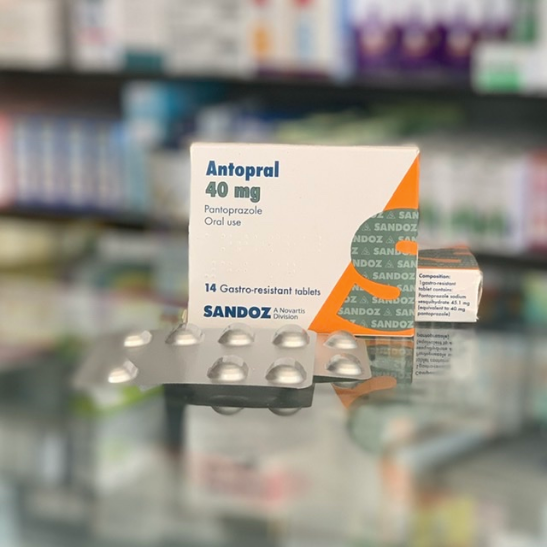
Antopral 40 mg 14 tablets
SKU: EGA-005063
Tradename
Antopral
Antopral
Composition
Each tablet contains: 40mg pantoprazole
Auxiliary components:
Calcium stearate, microcrystalline cellulose, crospividone, hiprolos, sodium carbonate, anhydrous silicon, anhydrous collodion.
Properties
It has antibacterial activity against Helicobacter pylori and contributes to the manifestation of the anti-Helicobacter effect of other drugs. The MIC is 128 mg / l. The therapeutic effect after a single dose comes quickly and lasts for 24 hours. Provides a rapid reduction in symptoms and healing of duodenal ulcers. When taken in a dose of 40 mg, pH values> 3 persist for than 19 hours. After 2 weeks of treatment ( mg daily), complete healing of duodenal ulcers is observed in 89% of patients. After 4 weeks of treatment (40 mg), 88% of patients experience complete healing of the gastric ulcer. The recurrence rate of peptic ulcers after treatment is 55%. Within 4 weeks of treatment at a dose of 40 mg / day provides complete remission in 82% of patients with gastroesophageal reflux disease stage Il-Ill (according to Savary — Miller), after 8 weeks in 92%. Complete endoscopic remission in 57% of children aged 6—13 years with stage lc / Il gastroesophageal reflux disease (according to Vandeplas) is achieved after 4 weeks of therapy at a dose of 20 mg / day. During 4—8 weeks of treatment, the level of gastrin in plasma increases 1.5 times. Maintenance therapy (40—80 mg daily for more than 3 years) in patients with peptic ulcer disease was accompanied by a slight increase in the number of enterochromaffin-like (ECL-) cells.
Experimental studies of carcinogenicity indicate that long-term use of pantoprazole is associated with an increased risk of ECL cell hyperplasia and the occurrence of gastric carcinoid, liver adenoma and carcinoma, and neoplastic processes in the thyroid gland.
Indications
Peptic ulcer of the duodenum or stomach in
the acute phase, incl. associated with taking NSAlDs, or refractory to therapy with histamine H2 receptor blockers; gastroesophageal reflux disease (moderate to severe); Zollinger-Ellison syndrome; combined anti-Helicobacter pylori eradication therapy in patients with peptic ulcers in order to reduce the frequency of relapses.
Mode of application:
Contraindications
Hypersensitivity to pantoprazole, benzimidazole derivatives or other components of the drug. Simultaneous administration of atazanavir. Due to insufficient data, the use of pantoprazole for the treatment of children under 12 is not recommended.
Carefully:
pregnancy, lactation, liver failure.
Side effects
About 5% of patients may experience side effects from the drug.
The most common side effects: diarrhea and headache — occur in about 1% of patients.
The following unwanted side effects from
Storage
Keep out of reach of children at a temperature not exceeding 24’C
Packaging:
The cardboard box contains 1 or 2 blisters of 7 tab.
التوصيل والدفع
تأكد من اسم الدواء والتركيز وحجم العبوة. تؤكد الصيدلية التوفر والسعر النهائي ومتطلبات الوصفة قبل إرسال الطلب. لا تغير علاجك اعتماداً على معلومات الموقع وحدها.