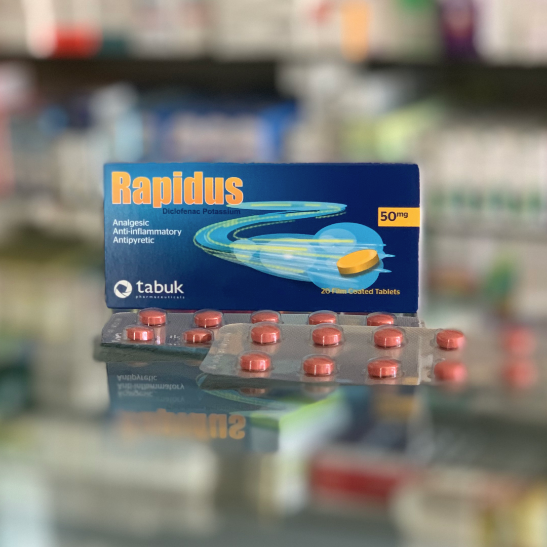
Rapidus 50 mg 20 tablets
SKU: EGA-005005
Tradename
Rapidus
Rapidus
Composition
Each p/ o tablet contains:
Diclofenac potassium — 50 mg.
Properties
Diclofenac potassium belongs to non-steroidal drugs with pronounced antirheumatic, analgesic, anti-inflammatory and antipyretic properties.
Indications
Rheumatoid arthritis, osteoarthritis, back pain; migraine attacks, acute musculoskeletal disorders and injuries, sprains, deformities and dislocations, relief of pain in fractures, acute gout, pain and inflammation control during orthopedic and dental operations.
Mode of application:
For oral administration, the tablets should be swallowed whole with liquid after meals. The lowest effective dose is used to control symptoms: the recommended daily dose is 100—150 mg in 2 or 3 divided doses. In mil cases, 75—100 mg daily in 2 or 3 divided do is sufficient. For primary dysmenorrhea, the daily dose is usually 50 — 150 mg. An initial dose of 50 mg is usually sufficient. If necessary, an initial dose of 100 mg can be prescribed, with a maximum of 200 mg / day achieved over several menstrual cycles. Treatment should begin when symptoms first appear and continue for several days. For migraines, the initial dose of 50 mg is at the first sign of an attack. If relief does not come 2 hours after the first dose, an additional 50 mg dose may be taken. If necessary, additional doses of 50 mg can be taken at intervals of 46 hours,
Contraindications
Children under 14; hypersensitivity to any component of the drug, aspirin; severe heart, hepatic, renal failure; bradycardia, severe arterial hypotension; stomach bleeding; period of pregnancy, lactation.
Precautions:
With the development of hepatic diseases, the diseases of the heart and blood vessels during therapy should be under the supervision of a physician. Weak and elderly patients, patients with low body weight should use the minimum therapeutically effective dose. Before prescribing the medication, it is necessary to undergo a clinical examination for patients with peptic ulcers; with a history of intestinal bleeding; with liver and kidney damage, including a history; with high blood pressure. With bronchial asthma, hay fever, acute and chronic respiratory pathologies, in patients with polyps in the nose, taking the drug can cause asthmatic attacks. Treatment of these conditions is symptomatic.
Side effects
Headaches, dizziness; vertigo; tachy- / bradycardia, arterial hypertension, arrhythmia, heart failure; painful sensations in the abdomen, vomiting, cramps, flatulence, nausea, diarrhea, dyspepsia; fluid retention in the body, edema; rash, Quincke’s edema.
Storage
Store at a temperature not exceeding 30C i dry place out of the reach of children.
Packaging:
The cardboard box contains 2 blisters of 10 p/o tablets each, paper instructions.
التوصيل والدفع
تأكد من اسم الدواء والتركيز وحجم العبوة. تؤكد الصيدلية التوفر والسعر النهائي ومتطلبات الوصفة قبل إرسال الطلب. لا تغير علاجك اعتماداً على معلومات الموقع وحدها.