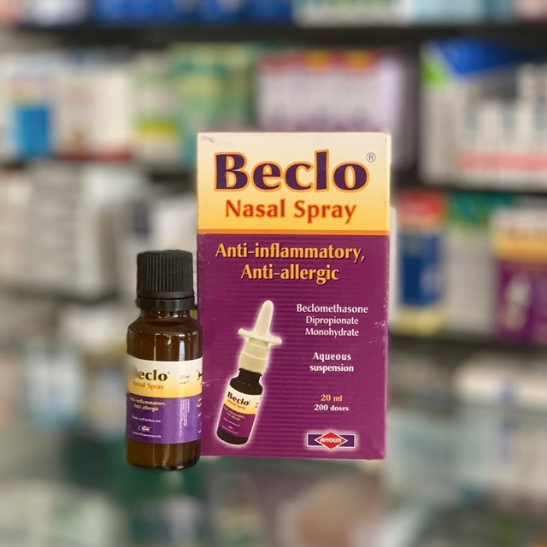
Beclo nasal spray 200 doses
SKU: EGA-004760
Trade name:
Beclo
Beclo
Composition
Each 100 ml of spray contains:
Beclomethasone dipropionate monohydrate 43.45
Equivalent to Beclomethasone dipropionate 42 mg
Auxiliary components:
Avicel, Twain 80, benzalkonium chloride, edetate disodium, anhydrous disodium hydrogenorthophosphate, purified water.
Properties
GCS for nasal use.
Beclomethasone dipropionate is a prodrug and has a weak affinity for glucocorticoid receptors. Under the influence of esterases, it turns into an active metabolite beclomethasone-17-monopropionate, which has a pronounced local anti-inflammatory effect by reducing the formation of chemotaxis substance (effect on delayed-type allergic reactions). By suppressing the production of metabolites of arachidonic acid and reducin the release of inflammatory mediators from mast cells, it inhibits the development of an immediate allergic reaction.
Prevents marginal accumulation of neutrophils, reduces inflammatory exudation and production of lymphokines, inhibits the migration of macrophages, reduces the intensity of infiltration and granulation processes, and the formation of chemotaxis substance. Reduces swelling of the nasal mucosa, mucus production. Improves mucociliary transport.
Indications
Seasonal and perennial allergic rhinitis; vasomotor rhinitis.
Method of administration and dosage:
Adults and children over 12 years old:
Contraindications
Hemorrhagic diathesis; frequent nosebleeds; respiratory tuberculosis; fungal infections; viral infections; children under 6 years old; I trimester of pregnancy; hypersensitivity to beclomethasone and excipients of the drug used.
Carefully
Amoebiasis; glaucoma; severe liver failure; hypothyroidism; recent myocardial infarctio ulceration of the nasal septum; after recent surgery in the nasal cavity or nasal injuries; in the Il and Ill trimesters of pregnancy; lactation period (breastfeeding).
Side effects
Allergic reactions: rarely — skin rash, urticari angioedema.
From the side of the nervous system: rarely — a violation of the olfactory and gustatory sensations, drowsiness, headache, dizziness.
From the side of the organ of vision: unknown — increased intraocular pressure, incl. glaucoma, cataract (with prolonged use), conjunctival hyperemia, decreased vision.
التوصيل والدفع
تأكد من اسم الدواء والتركيز وحجم العبوة. تؤكد الصيدلية التوفر والسعر النهائي ومتطلبات الوصفة قبل إرسال الطلب. لا تغير علاجك اعتماداً على معلومات الموقع وحدها.