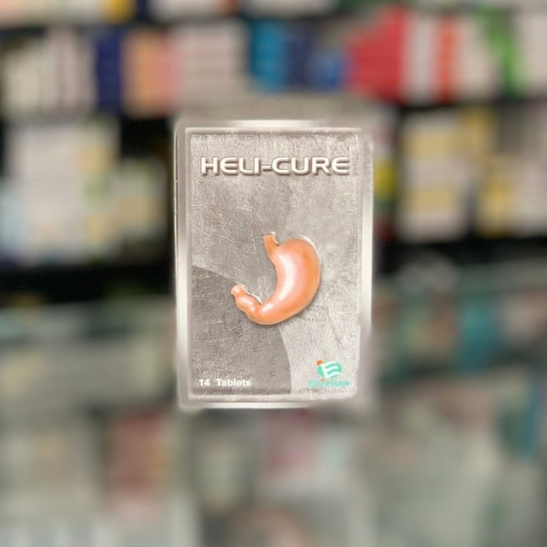
Heli-Cure 14 tablets
SKU: EGA-004725
Tradename
Heli-Cure
Composition
Each tablet contains:
Omeprazole 20 mg
Clarithromycin 250 mg
Tinidazole 500 mg
Auxiliary components:
Mannitol, povidone, croscarmellose sodium, sodium lauryl sulfate, talc, magnesium stearate.
Properties
Omeprazole inhibits the secretion of hydrochloric acid due to specific inhibition of H + K + -AT Pase — an enzyme found in the membranes of parietal cells of the gastric mucosa. Reduces basal and stimulated secretion regardless of the nature of the stimulus. After a single oral administration of the drug, the effect of omeprazole occurs within the first hour and lasts for 24 hours, the maximum effect is achieved after 2 hours. After stopping the drug intake, secretory activity is fully restored after 3-5 days.
Clarithromycin is a semi-synthetic antibioti from the group of broad-spectrum macrolides.
It has an antimicrobial effect, which is associated with the suppression of protein synthesis by interacting with the 50S ribosomal subunit of a microbial cell. Effective against a large number of gram-positive, gram-negative aerobic and anaerobic microorganisms, including Helicobacter pylori. The metabolite 14-hydroxyclarithromycin formed in the body also has a pronounced antimicrobial activity.
Indications
eradication therapy of Helicobacter pylori in gastric ulcer and duodenal ulcer.
Method of administration and dosage:
The optimal dosage regimen is selected by the doctor after the tests.
Contraindications
-increased sensitivity to omeprazole, clarithromycin or tinidazole, as well as to macrolide antibiotics;
combined use with cisapride, pimozide, astemizole, terfenadine, ethanol is prohibited;
-pregnancy;
Side effects
On the part of the digestive system: dysbiosis, diarrhea or constipation, nausea, vomiting, flatulence, abdominal pain, dry mouth, taste disturbance, metallic taste in the mouth, decreased appetite, stomatitis, transient increase in the activity of liver enzymes in plasma, impaired liver function, hepatitis (including jaundice), in patients with previous liver disease — encephalopathy; rarely pseudomembranous enterocolitis.
From the side of the central nervous system: headache, dizziness, agitation, increased fatigue, weakness, drowsiness, insomnia, ataxia, paresthesia, depression, confusion, hallucinations, epileptic reactions, peripheral neuropathy, convulsions, fear, nightmares, disorientation, psychosis, depersonalization, noise in ears.
From the musculoskeletal system: muscle weakness, myalgia, arthralgia.
التوصيل والدفع
تأكد من اسم الدواء والتركيز وحجم العبوة. تؤكد الصيدلية التوفر والسعر النهائي ومتطلبات الوصفة قبل إرسال الطلب. لا تغير علاجك اعتماداً على معلومات الموقع وحدها.