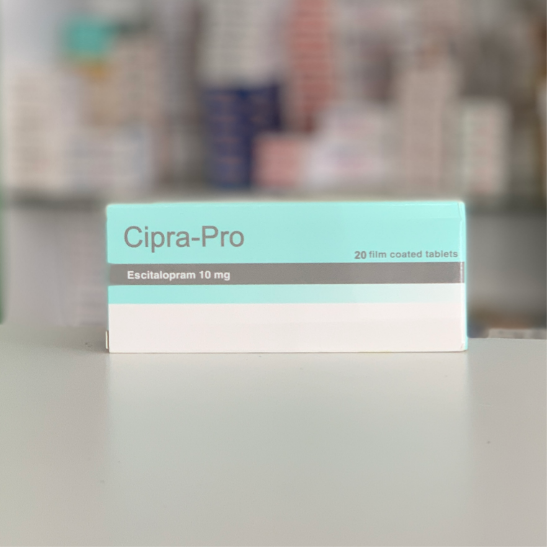
Cipra-Pro 10 mg 10 tablets
SKU: EGA-003267
Tradename
Cipra-Pro (Cipra-Pro)
Compound:
Each tablet contains:
escitalopram (as oxalate) 10 mg
Auxiliary components:
Microcrystalline cellulose, lactose monohydrate, croscarmellose sodium, magnesium stearate.
Properties
Antidepressant. Selectively inhibits the reuptake of serotonin; increases the concentration of the neurotransmitter in the synaptic cleft, enhances and prolongs the action of serotonin on postsynaptic receptors. Escitalopram practically does not bind to serotonin (5-HT), dopamine (D1 and D2) receptors, α-adrenergic, m-cholinergic receptors, as well as benzodiazepine and opioid receptors.
The antidepressant effect usually develops after 2-4 weeks. after the start of treatment. The maximum therapeutic effect of the treatment of panic disorders is achieved approximately 3 months after the start of treatment.
Indications
Depression, panic disorders (including with agoraphobia).
Dosage and administration
Taken orally, regardless of food intake. Depending on the indications, a single dose is 10-20 mg / day. The maximum daily dose is 20 mg. The duration of treatment is several months. When treatment is stopped, the dose should be gradually reduced over 1-2 weeks. in order to avoid the occurrence of the «withdrawal» syndrome.
For elderly patients (over 65 years old), the recommended dose is 5 mg / day, the maximum daily dose is 10 mg.
In case of impaired liver function, the recommended initial dose during the first 2 weeks. treatment is 5 mg / day. Depending on the individual response, the dose may be increased to 10 mg / day.
Contraindications
Simultaneous use of MAO inhibitors, children and adolescents under 15 years of age, pregnancy, lactation, hypersensitivity to escitalopram.
Precautionary measures:
During the period of treatment, patients should avoid driving vehicles and other activities that require a high concentration of attention and speed of psychomotor reactions.
Side effects
From the nervous system: dizziness, weakness, insomnia or drowsiness, convulsions, tremors, movement disorders, serotonin syndrome.
On the part of the digestive system: nausea, vomiting, dryness of the oral mucosa, taste disturbances, loss of appetite, diarrhea, constipation, changes in liver function.
From the side of the cardiovascular system: orthostatic hypotension.
التوصيل والدفع
تأكد من اسم الدواء والتركيز وحجم العبوة. تؤكد الصيدلية التوفر والسعر النهائي ومتطلبات الوصفة قبل إرسال الطلب. لا تغير علاجك اعتماداً على معلومات الموقع وحدها.