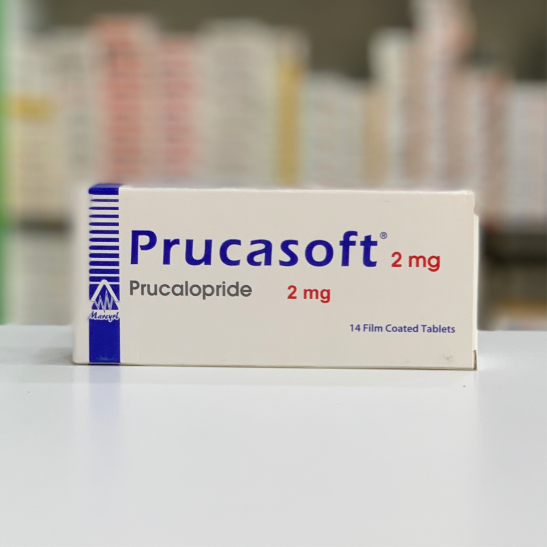
Prukasoft 2 mg 14 tablets
SKU: EGA-003194
Tradename
Prukasoft
Prucasoft
Compound:
Each tablet contains:
Prucalopride 2 mg
Auxiliary components:
Lactose, starch, microcrystalline cellulose, croscarmellose, aerosil, magnesium stearate, titanium dioxide, talc.
Properties
Prucalopride is a dihydrobenzofuran carboxamide that enhances intestinal motility. Prucalopride is a selective, high-affinity 5HT4 serotonin receptor agonist, which most likely explains its effect on intestinal motility. Binding to other types of receptors in vitro was observed only at concentrations of the substance exceeding its affinity for HT4 receptors by at least 150 times.
Indications
Prukasoft is indicated for the symptomatic treatment of chronic constipation in adults in whom laxatives have not been effective in relieving symptoms.
Dosage and administration
The drug is taken orally, regardless of food intake, at any time of the day.
Adults: 2 mg 1 time per day. Elderly (over 65 years): start with 1 mg 1 time per day, if necessary, increase the dose to 2 mg 1 time per day. Children and adolescents: Prukasoft is not recommended for use in children and adolescents under 18 years of age.
Due to the specific mechanism of action of prucalopride (stimulation of intestinal motility), an increase in the daily dose of more than 2 mg is unlikely to increase the effect. If taking prucalopride once a day for 4 weeks does not give an effect, the patient should be re-examined and the advisability of continuing treatment should be determined.
Contraindications
Hypersensitivity to the active ingredient or any excipient;
— impaired renal function requiring dialysis;
— intestinal perforation or obstruction due to anatomical or functional disorders of the intestinal wall, mechanical intestinal obstruction, severe intestinal inflammation, such as Crohn’s disease, ulcerative colitis and toxic megacolon / megarectum;
Side effects
From the side of the central nervous system: very often — headache; often — dizziness; infrequently — tremor.
From the side of the cardiovascular system: infrequently — palpitations.
From the gastrointestinal tract: very often — nausea, diarrhea, abdominal pain; often — vomiting, dyspepsia, rectal bleeding, flatulence, abnormal bowel sounds; infrequently — anorexia.
التوصيل والدفع
تأكد من اسم الدواء والتركيز وحجم العبوة. تؤكد الصيدلية التوفر والسعر النهائي ومتطلبات الوصفة قبل إرسال الطلب. لا تغير علاجك اعتماداً على معلومات الموقع وحدها.