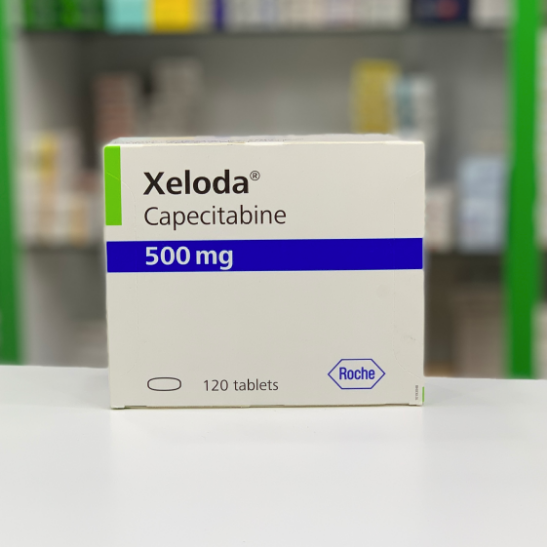
Xeloda
SKU: EGA-002868
Trade Name:
Xeloda
Composition
Capecitabine
Inactive ingredients:
Lactose anhydrous, croscarmellose sodium, hypromellose, cellulose microcrystalline, magnesium stearate, talk, titanium dioxide, yellow iron oxide, red iron oxide.
Properties
Capecitabine is a fluoropyrimidine carbamate for oral use and belongs to the group of tumor-activated and tumor-selective cytostatics. It is not itself cytotoxic, but is converted by three enzymatic steps, the final step preferentially in the tumor, into the cytotoxic active substance.
5-FU inhibits cell division by blocking DNA synthesis ( enzyme inhibition), resulting in the formation of structurally defective RNA ( incorporation of 5-FU), which directly affects protein biosynthesis.
The formation of 5-FU from capecitabine is preferentially catalyzed in the tumor by the tumor-associated angiogenic factor thymidine phosphorylase. This keeps the burden on healthy tissue, due to systemic 5-FU, to a minimum. The stepwise enzymatic biotransformation of capecitabine to 5-FU leads to higher concentrations in tumor tissue than in normal tissue.
Indications
-Colon and colorectal cancer
-Breast cancer
-Esophageal cancer, cancer of the gastroesophageal junction and gastric cancer
Dosage and administration
Ask your doctor before administering, increasing or decreasing the dose.
Contraindications
Known hypersensitivity to the active ingredient, to other fluoropyrimidines or to one of the excipients.
Known severe dihydropyrimidine dehydrogenase deficiency.
Pregnancy and lactation.
Side effects
Common: diarrhea, nausea, vomiting,stomatitis and hand-foot syndrome, herpes simplex, cystitis, granulocytopenia, hyperkalemia, hypokalemia, dehydration, weight loss,insomnia, lethargy, hypoesthesia, hyperesthesia, conjunctivitis, eye irritation, blurred vision, tinnitus. hypoacusis, vertigo, hypotension, dyspnea, epistaxis, cough. pharyngolaryngeal and oropharyngeal pain, rhinorrhea, dysphonia, pulmonary embolism.
Uncommon: pancytopenia, bone marrow depression, hypertriglyceridemia, encephalopathy, confusion, cerebral signs such as ataxia, dysarthria, impaired balance and abnormal coordination, heart failure, cardiomyopathy, sudden cardiac death, tachycardia, atrial arrhythmias including atrial fibrillation, ventricular extrasystoles.
Rare: lacrimal duct stenosis and corneal disorders including keratitis, local and fatal systemic infections.
Storage
Store at a temperature not exceeding 30°C.
Package:
The carton holds 60 tablets of 150 mg or 120 tablets of 500 mg.
التوصيل والدفع
تأكد من اسم الدواء والتركيز وحجم العبوة. تؤكد الصيدلية التوفر والسعر النهائي ومتطلبات الوصفة قبل إرسال الطلب. لا تغير علاجك اعتماداً على معلومات الموقع وحدها.