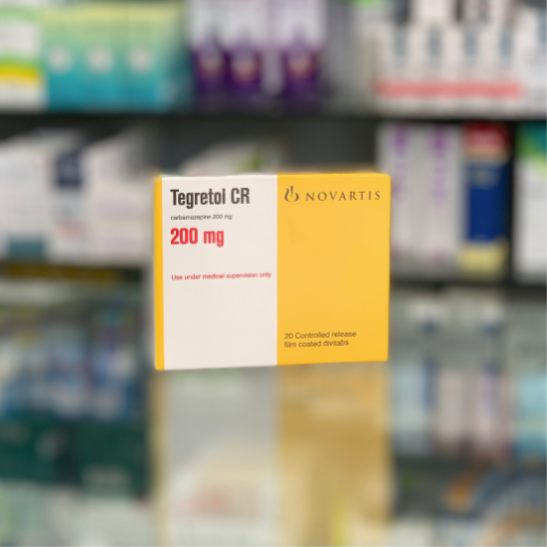
Tegretol SR 200 mg 20 tablets
SKU: EGA-004770
Tradename
Tegretol SR
Tegretol SR
Composition
Each tablet contains:
Carbamazepine 200 mg
Auxiliary components:
colloidal silicon dioxide (aerosil), potato starch, povidone K30, polysorbate 80, talc, magnesium stearate.
Properties
An antiepileptic agent (dibenzazepine derivative), which also has a normotimic, antimanic, antidiuretic (in patients with diabetes insipidus) and analgesic (in patients with neuralgia) effect.
The mechanism of action is associated with the blockade of potential-dependent Na+ —
channels, which leads to stabilization of the neuronal membrane, inhibition of the occurrence of serial neuronal discharges and a decrease in synaptic impulse conduction. Prevents the re-formation of Na + -dependent action potentials in depolarized neurons. Reduces the release of the excitatory neurotransmitter amino acid glutamate, increases a reduced seizure threshold, etc. reduces the risk of developing an epileptic seizure. Increases conductivity for K +, modulates voltage-gated Ca2 + -channels, which can also cause the anticonvulsant effect of the drug. Corrects epileptic personality changes and, ultimately, increases the communication skills of patients, contributes to their social rehabilitation. It can be prescribed as the main therapeutic drug and in combination with other anticonvulsant drugs. Effective for focal (partial) epileptic seizures (simple and complex), accompanied or not accompanied by secondary generalization, with generalized tonic-clonic epileptic seizures, as well as with a combination of these types (usually ineffective for small seizures — petit mal, absences and myoclonic seizures) .
Indications
Epilepsy (excluding absences, myoclonic or
flaccid seizures) — partial seizures with complex and simple symptoms, primary and secondary generalized forms of seizures with tonic-clonic seizures, mixed forms of seizures (monotherapy or in combination with other anticonvulsants); idiopathic trigeminal neuralgia, trigeminal neuralgia in multiple sclerosis, idiopathic glossopharyngeal neuralgia, alcohol withdrawal syndrome, treatment of affective disorders, polydipsia and polyuria in diabetes insipidus, pain syndrome in diabetic polyneuropathy. Prevention of phase affective disorders (manic-depressive psychosis, schizoaffective disorders, etc.).
Method of administration and dosage:
Contraindications
Hypersensitivity to carbamazepine and chemically similar drugs (tricyclic antidepressants) or to any other componen the drug, acute intermittent porphyria (including a history), concomitant use of monoamine oxidase inhibitors (hereinafter MAO inhibitors) and within 2 weeks after them withdrawal, violation of bone marrow hematopoiesis, atrioventricular block, pregnancy and lactation.
Carefully. Hyponatremia of dilution, old age, alcohol intake, inhibition of bone marrow hematopoiesis while taking medications
(history); hyperplasia of the prostate, increased intraocular pressure, severe heart failure, liver failure, chronic renal failure.
Side effects
From the side of the central nervous system: dizziness, ataxia, drowsiness, general weakness, headache, paresis of accommodation, tremor, tics, nystagmus, orofacial dyskinesia, oculomotor disorders, dysarthria, choreoathetoid disorders, peripheral neuritis, paresthesias, muscle weakness and paresis.
From the mental sphere: hallucinations, depression, loss of appetite, anxiety, aggressive behavior, agitation, disorientation, activation of psychosis. Allergic reactions: urticaria, exfoliative dermatitis, erythroderma.
From the side of hematopoiesis: leukopenia, thrombocytopenia, eosinophilia, leukocytosis, lymphadenopathy; agranulocytosis, aplastic anemia, true erythrocytic aplasia, megaloblastic anemia, acute intermittent porphyria, reticulocytosis, hemolytic anemia.
التوصيل والدفع
تأكد من اسم الدواء والتركيز وحجم العبوة. تؤكد الصيدلية التوفر والسعر النهائي ومتطلبات الوصفة قبل إرسال الطلب. لا تغير علاجك اعتماداً على معلومات الموقع وحدها.